We respect your privacy


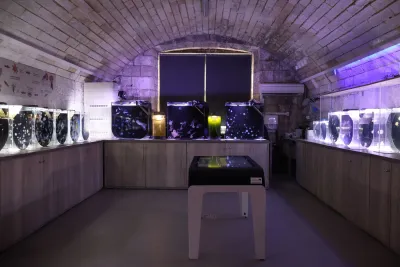







As every June, this year we are doing field work on the island of Mljet, and next year we will celebrate our full ten years of cooperation. Since the opening of the Pula Aquarium in 2000, every year we have been going to the southern Adriatic, to Konavle near Dubrovnik, and to the southern Dalmatian islands such as Vis, Korčula, Lastovo and Mljet - in search of interesting and attractive species: moray eels, groupers, crustaceans such as lobster and chub, but also for lesser-known fish such as Mediterranean cardinalfish (𝑨𝑒𝒐𝒈𝒐𝒏 𝒊𝒎𝒃𝒆𝒓𝒃𝒊𝒔), swallowtail seaperch or marine goldfish (𝑨𝒏𝒕𝒉𝒊𝒂𝒔 𝒂𝒏𝒕𝒉𝒊𝒂𝒔), ornate wrasse or Turkish wrasse (𝑻𝒉𝒂𝒍𝒂𝒔𝒔𝒐𝒎𝒂 𝒑𝒂𝒗𝒐), and recently also Mediterranean Parrotfish (𝑺𝑒𝒂𝒓𝒊𝒔𝒐𝒎𝒂 𝒄𝒓𝒆𝒕𝒆𝒏𝒔𝒆).
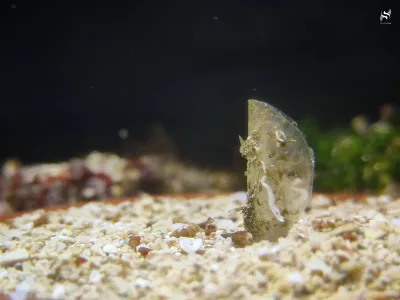
For all these species, we must provide pools with warmer seawater than that characteristic of our northern Adriatic. Interestingly, we still have live moray eels and one grouper brought to Pula back in 2000. However, most other species do not live as long in controlled conditions, so we have to replace them over time. Some species live longer in the aquarium than in nature, which depends on their biology and nutritional needs. In addition to various fish and crab species, we also spotted three individuals of the 𝑷𝒊𝒏𝒏𝒂 𝒓𝒖𝒅𝒊𝒔.
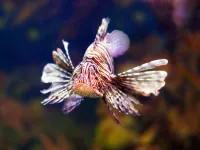
Last year, we caught tropical species originating from the Indian Ocean, four individuals of the invasive lionfish (𝑷𝒕𝒆𝒓𝒐𝒊𝒔 𝒎𝒊𝒍𝒆𝒔) and two squaretail rabbitfish (𝑺𝒊𝒈𝒂𝒏𝒖𝒔 𝒍𝒖𝒓𝒊𝒅𝒖𝒔). This year, we have caught two larger squaretail rabbitfish so far, and we have also noticed something else. Namely, in almost every bay, even the uninhabited ones, there are large amounts of plastic: bottles, nylon and other single-use plastic waste floating in the water column.
In conversation with the hosts, if we try to imagine the sea around Mljet in the past, before intensive fishing, climate change and today's human pressure, we see a system in which the relationships between organisms were stable, and the biomass was significantly higher than today. We see a sea in which groupers inhabit rocks and semi-caves, patrol their territory and react to each new, unknown species. On the other hand, octopuses explore cracks, ambush and hunt opportunistically, acting as an additional regulator that maintains the balance in the community. In such a system, invasive species find it difficult to spread because the constant pressure of predators keeps their population under control. Therefore, it is crucial to reduce the pressure on groupers and octopuses because, even if they do not remove every lionfish, their presence limits its growth and spread.
Therefore, it is extremely important that we all get involved in the fight against lionfish so that it does not become a fight against windmills, as we see from examples from other parts of the Mediterranean. For example, examples from Greece show how serious this problem is, where lionfish have already become a significant part of fishermen's catches.
While there is no simple solution, the direction is clear: without large predators, there is no stable marine ecosystem.