We respect your privacy






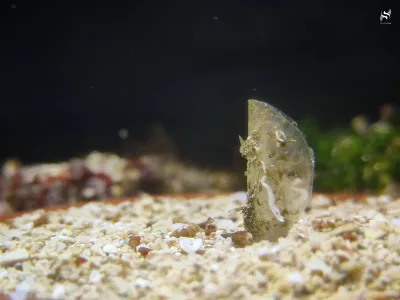
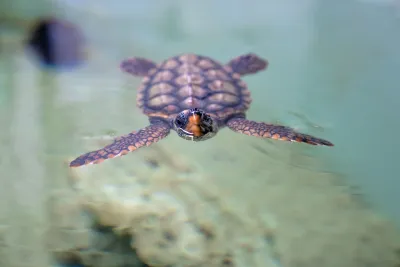




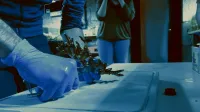
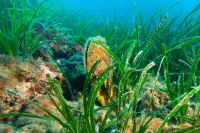
At the beginning of June, we received cuttlefish eggs from local fishermen, from which more than 70 young individuals hatched during the month. On Friday, June 26, 2026, we returned them to the sea, giving them the opportunity to continue living in their natural environment and making a small contribution to the preservation of the local population.
We were especially pleased that the children, who had been swimming there, joined us. Through conversation, we introduced them to the life of cuttlefish and their important role in the marine ecosystem, as predators, but also as prey for other marine organisms. Each returned individual is a new opportunity for life and a small step towards preserving our marine biodiversity.
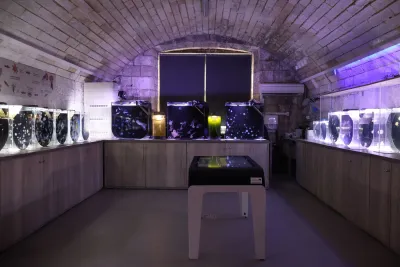
In nature, due to numerous predators, only about 1% of young cuttlefish reach adulthood. When breeding, it is necessary to provide a large number of hiding places and gradually separate them into a larger number of aquariums. Namely, cuttlefish are not social animals, but meet mainly for the purpose of reproduction and show strong territoriality.
Like other cephalopods, cuttlefish have a short but intense life cycle. Their lifespan usually lasts between 12 and 24 months, and they reach sexual maturity during their first winter. After reproduction, both males and females die, which is called semelpary, or rather reproduction only once in their lifetime.
Even when they hatch, although they are only 6 to 9 mm long, young cuttlefish completely resemble adults. They are immediately ready for independent life and start hunting without parental care from the first day. In nature, they feed on zooplankton in the earliest stages, while in the aquarium we fed them with one-day-old brine shrimp. As they grow in the sea, they switch to small shrimps, or amphipods, fish and mollusc larvae, and polychaetes, and in controlled conditions we feed them with adult brine shrimp and mysid shrimp. This period lasts several months and is characterized by extremely rapid growth and development.