 We respect your privacy



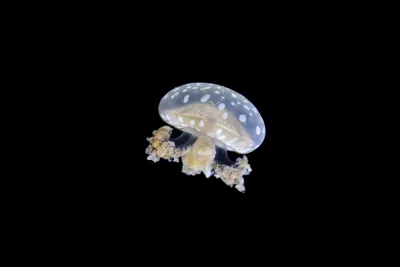





Diver Marko Vrečo from CPA Pula during an internship dive on the Velmont wreck, in cooperation with the Hippocampus Diving Center, on July 18, 2026, filmed a large colony of gelatinous organisms from the group of salps (Thaliacea), which are included in the tunicates (Tunicata). These are pelagic organisms with a characteristic transparent, gelatinous, barrel-shaped body, through which reddish internal organs are often visible. A solitary salp reproduces asexually by budding, creating a whole chain of new individuals that are genetically identical, or clones. These individuals later mature and reproduce sexually. The video shows just such a chain in which the individuals move in a very synchronized manner, which makes them look like one long organism. Salps move by rhythmic contractions that push water through their bodies, which provides propulsion, while at the same time filtering the seawater and feeding on small organic particles and phytoplankton. The occurrence and abundance of salps are influenced by a number of factors, including food availability, sea temperature, sea currents and other environmental conditions. In the Adriatic, in addition to the better-known species such as Salpa maxima, Salpa fusiformis and Thalia democratica, newer newcomers have also been recorded, including the thermophilic species Thalia orientalis. Frequent or long-term occurrences of these organisms are interesting to scientists because they can provide valuable insight into changes within the marine ecosystem and food webs. We would like to express our sincere gratitude to Marko Vreča for providing the video material!
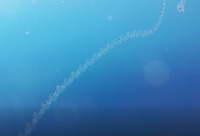
A colony of sea squirts (𝐓𝐮𝐧𝐢𝐜𝐚𝐭𝐚) recorded in the western part of Istrian waters
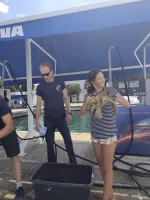
Loggerhead Turtle Juli Arrives at the Rescue Center
Today, July 24, a new resident, a juvenile loggerhead turtle named Juli, arrived at our Rescue Cente...

Renovation Works at the Maritime Museum
Work on establishing the future Naval Museum in the former “Arena Trikotaže” building is progressing...
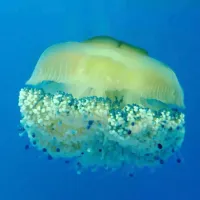
Large aggregations of Mediterranean jellyfish (𝐂𝐨𝐭𝐲𝐥𝐨𝐫𝐡𝐢𝐳𝐚 𝐭𝐮𝐛𝐞𝐫𝐜𝐮𝐥𝐚𝐭𝐚) observed along Hawaii Beach in Pula
On Saturday, July 25, 2026, during the night hours, our employee noticed large aggregations of Medit...
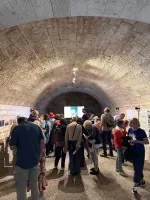
A new exhibition about Pula's fortifications was presented as part of the Night of Fortresses
Today, May 8 at 2 p.m., on the terrace of the San Giovanni Battery, known as the Verudela Terrace, w...