We respect your privacy










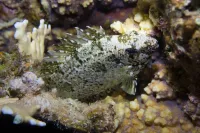
Yesterday, June 15,in the southeastern bays of the island of Mljet, in the underwater "forest" of cystocysts, one of the most important and sensitive habitats of the Adriatic, we noticed individuals of the tropical spinefoot from the genus Siganus (Siganus luridus / S. rivulatus).
The spinefoot originates from the tropical areas of the Red Sea and the Indian Ocean, and arrived in the Mediterranean through the Suez Canal. Today, it is widely distributed in its eastern and central parts, while it is still sporadically present in the Adriatic. It is a herbivorous fish that inhabits shallow coastal areas overgrown with algae, where it can often be seen in schools or smaller groups.
It is characterized by a very high reproductive potential, one female can produce more than 200,000 eggs, which allows it to quickly spread and successfully colonize new areas. It is not a territorial species, but its main defense is associated with the poisonous spines of the dorsal, anal and pelvic fins, which protect it from predators such as groupers and other large fish. It is important to emphasize that this is a defensive poison, which is transmitted by the sting of the spines, and not a toxin that accumulates in the flesh. Its effect is local, causing pain, burning, redness and mild swelling. Although the sting can be unpleasant, it rarely leads to serious consequences. In terms of chemical composition, it is a complex of protein substances located in the glands next to the spines, with an inflammatory and cytotoxic effect that causes a local tissue reaction.
The combination of the high fecundity of the marbled fish, limited predation on it and intensive grazing of algae makes it ecologically very influential because it can significantly change the structure and composition of underwater communities