We respect your privacy







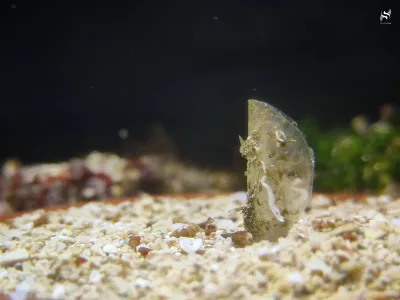




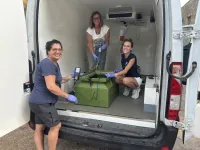
On Tuesday, July 28, we took over five adults of the noble pinna (Pinna nobilis) from the Venetian lagoon, where one of the few remaining large populations of this species in the Mediterranean, estimated at around 10,000 individuals, is located.
This is the third time that, as part of the EU project LIFE PINNARCA (Protection and restoration of Pinna nobilis populations as a response to the catastrophic pandemic started in 2016), which was carried out from 2021 to 2024, and the current project LIFE PINNACARE - Pinna nobilis conservation and restoration (2025 - 2029), of which we are partners, we have received noble feathers that we use exclusively for reproduction attempts.
We hereby sincerely thank Dr. Francesca Carella from Federico II University in Naples and the Government of the Republic of Italy for this precious donation. We would like to express our special thanks to Dr. Marco Sigovini from the Institute of Marine Sciences (ISMAR) in Venice, who carried out the demanding field work to collect the specimens.
Visibility in the Venetian Lagoon is very poor, the pen shells are deeply buried in the muddy bottom and are located within dense meadows of seagrasses, which makes their detection and extraction extremely challenging. Dr. Sigovini told us that the population density of the noble pen shell in that area is significantly lower today than in previous years, as these individuals, although not all, were exposed to the parasite that caused the mass mortality of the species throughout the Mediterranean.
For scientific purposes, the fouling from the shells was sampled, and upon arrival in Pula, additional analyses will be conducted to determine whether the specimens are positive for the presence of the parasite. Previous experience has shown that out of a total of 15 previously received specimens, slightly less than half were positive for the presence of the parasite, with the infection occurring before their arrival at the sanctuary.
Unfortunately, individuals in which the presence of the parasite was not confirmed also died. Previous research suggests that such individuals are often immunocompromised and have difficulty coping with the stress associated with attempts to reproduce, which has also been observed in individuals from other populations maintained in research institutions in Spain and Italy. Despite the numerous challenges, each new individual represents a valuable opportunity to gain new knowledge and develop methods that could contribute to the conservation and restoration of this critically endangered species in the future.