We respect your privacy






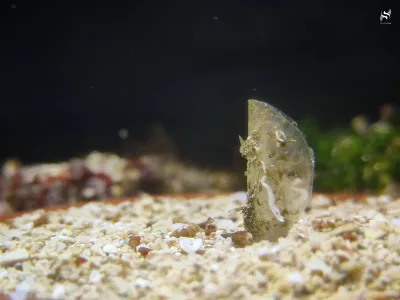




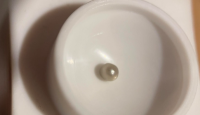
This month, Mr Dejan Momirov donated to us a pearl from a noble pen shell (Pinna nobilis), which he found in the Makarska Riviera area back in the 1960s.
Like many other bivalves and some marine gastropods, the noble pen shell can occasionally produce pearls. A pearl forms as a result of the animal’s defensive response when foreign material, a parasite, or an injury irritates the tissue between the mantle and the shell. Layers of mineral material are gradually deposited around the site of irritation, accumulating over time to form a pearl. The size of the pearl depends on the duration of this process, as well as the type and intensity of the irritation that triggered its formation.
Pearls are composed mainly of calcium carbonate (CaCO₃), and its mineral structure influences their appearance and optical properties. In pen shells and related bivalves, so-called “pen pearls” are known to occur. They can be nacreous, consisting of tiny calcium carbonate platelets bound by thin layers of organic material, or non-nacreous, such as calcitic pearls, in which calcium carbonate is arranged in a crystalline structure.
Due to their rarity and attractive appearance, nacreous pearls produced by some bivalves can have significant market value. Historically, however, the noble pen shell was used primarily for its large, nacre-rich shell, from which various decorative and practical objects, such as buttons and jewellery, were made.
Among the best-known commercially valuable pearls today are Akoya and South Sea pearls. South Sea pearls are produced by the large pearl oyster (Pinctada maxima) and are known for their large size, thick layer of nacre, and distinctive lustre.
Once again, we would like to warmly thank Mr Momirov for this valuable donation, which will enrich the exhibition at our Noble Pen Shell Sanctuary.